
pH — short forpower of hydrogen— is one of the most important factors in your hot tub’s water...
If you’re new to hot tub ownership, you may have assumed alkalinity and pH were the same thing — or not something to worry about. Even seasoned hot tubbers sometimes get confused about the difference.
In this guide, we’ll break down what alkalinity actually is, why it matters, how it affects your water, and how to correct it when things go wrong.
🔬 What Is Alkalinity?
Alkalinity refers to the amount of calcium, magnesium, and other buffering compounds in your water. These minerals act as a stabilizer for your pH, preventing it from swinging too high or too low.
Think of alkalinity as your hot tub’s first line of defense for maintaining healthy, balanced water.
- Alkalinity = your water’s ability to resist pH changes
- pH = how acidic or basic your water is
When alkalinity is in range, pH stays steady. When it’s not, everything becomes harder to control.
🧪 Testing Your Alkalinity
The ideal alkalinity range for hot tubs is:
👉 80–120 ppm (parts per million)
You can test alkalinity using:
- Test strips
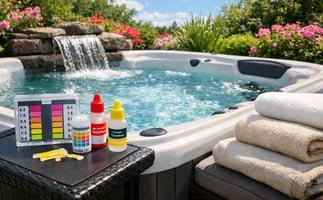
- A liquid drop kit
- A professional water test at your local hot tub store
Pro tip: A drop kit is often easier to read and more accurate than strips. The colors stay stable and give clearer results.
How often should you test?
- Beginners: once a week
- Experienced owners: twice a month (if you use your tub regularly)
⚠️ What Happens If Alkalinity Is Too Low? (<80 ppm)
Low alkalinity can cause:
- Corrosion of metal components
- Etching or staining of surfaces
- Burning or itching of the eyes and skin
- Green or discolored water (often mistaken for algae)
- Wild, unpredictable pH swings
Low alkalinity = unstable water.
⚠️ What Happens If Alkalinity Is Too High? (>120 ppm)
High alkalinity leads to:
- Scale buildup on heaters, jets, and plumbing
- Cloudy, dull water
- Eye and skin irritation
- Difficulty lowering pH
- Reduced sanitizer effectiveness
High alkalinity = stubborn, hard‑to‑balance water.
🌧️ What Affects Alkalinity?
Alkalinity can rise or fall due to:
- Your water source (city or well water)
- Rainwater entering the tub
- Body oils, lotions, and cosmetics
- Chemical treatments
- Evaporation, which concentrates minerals
- Microbial activity (yes, even that can consume alkalinity)
Understanding the cause helps you correct the problem faster.
⬆️ Fixing Low Alkalinity
To raise alkalinity, use:
👉 Baking Soda (Sodium Bicarbonate)
It’s safe, effective, and widely used.
Because alkalinity and pH are connected, raising alkalinity may slightly raise pH as well.
Adjustment Tips
- Add chemicals gradually
- Circulate water for 30 minutes
- Retest before adding more
Small steps prevent overshooting your target.
⬇️ Fixing High Alkalinity
Before adjusting, ask yourself:
How old is the water?
If it’s over 4 months old, treat it like expired milk — dump and refill. Fresh water is often the easiest fix.
If the water is still good, you have two options:
1. Sodium Bisulfate (pH Down / Decreaser)
Your best choice for hot tubs.
It lowers alkalinity gently and predictably.
2. Muriatic Acid
Effective but dangerous.
Use only in extreme cases (e.g., very poor well water).
If you’re considering this, you’re usually better off with trucked‑in water.
Adjustment Tips
- Add chemicals gradually
- Circulate water
- Wait Two Hours
- Retest before adding more
Why pH Down?
Because alkalinity and pH are tied together — adjusting one affects the other. Sodium bisulfate gives you more control in a small body of water.
📉 Why High Alkalinity Happens
Common causes include:
- Filling with high‑alkalinity source water
- Body oils and lotions
- Overuse of calcium‑based chlorine
- Evaporation concentrating minerals
Once you understand the cause, the fix becomes much easier.
📈 Why Low Alkalinity Happens
Low alkalinity can be caused by:
- Rainwater
- Low‑alkalinity source water
- Bromine or chlorine reactions
- Acidic lotions or oils
- Microbial activity consumes alkaline compounds
Again, gradual adjustments are key.
🧭 Next Steps for Perfect Alkalinity
1. Test Regularly
Weekly for beginners, twice a month once you’re comfortable.
2. Use the Right Tools
Drop kits give the clearest, most reliable readings.
3. Maintain the 80–120 ppm Range
This prevents corrosion, scaling, and pH instability.
4. Fix High Alkalinity with Sodium Bisulfate
Use muriatic acid only in extreme cases.
5. Fix Low Alkalinity with Baking Soda
Add slowly and retest.
6. Make Adjustments Gradually
Small changes = better control.
7. Keep Up with Overall Maintenance
Clean filters, change water regularly, and follow manufacturer guidelines.
8. Ask for Help When Needed
Your local hot tub professionals can test water, diagnose issues, and guide you through tricky situations.
🏁 Final Thoughts
Mastering alkalinity is one of the most important steps in maintaining a clean, comfortable, long‑lasting hot tub. Once you understand how alkalinity works — and how it interacts with pH — everything else in water care becomes easier.
Balanced alkalinity means:
- Clearer water
- Happier skin
- Longer‑lasting equipment
- A more enjoyable soak every time
If you ever need help, Clover is here with free water testing, expert advice, and all the products you need to keep your spa perfectly balanced.
Tap to Play