A Clover Home Leisure Reality Check
🌊 The Hidden Dangers of Using Saltwater Systems on Above‑Ground Pools
Saltwater pools sound dreamy — softer water, fewer harsh smells, and a reputation for being “low‑maintenance.” But here’s the truth most retailers skip:
Saltwater systems can seriously damage steel and aluminum above‑ground pools.
Not overnight. Not dramatically. But slowly, quietly, and often beyond repair.
At Clover, we believe in honest guidance that protects your investment. If you’re considering a salt system for an above‑ground pool, this is essential reading.
⚠️ Why Saltwater and Above-Ground Pools Don’t Mix
Saltwater systems don’t eliminate chlorine — they generate it. To do that, they require salt levels 10–15 times higher than those in natural freshwater. And that salt becomes the real problem.
🧲 1. Salt Accelerates Corrosion on Steel Walls
Steel is strong and reliable, but salt is a corrosion accelerator.
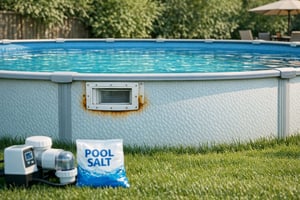
Even with protective coatings, every above‑ground pool has exposed metal at:
- Skimmer openings
- Return fittings
- Hardware cutouts
These areas are the first to corrode. Once salt gets under the coating, it spreads — weakening the wall from the inside out.
🛠️ 2. Aluminum Doesn’t Rust… But It Absolutely Corrodes
Aluminum is often marketed as “salt‑safe,” but that’s misleading.
Saltwater causes:
- Pitting corrosion
- Surface weakening
- Calcium buildup
- Long‑term structural fatigue
Aluminum is already softer than steel. Add saltwater, and it becomes even more vulnerable to dents, punctures, and wall damage.
Saltwater and aluminum aren’t a durable match.
📄 3. Saltwater Often Voids Manufacturer Warranties
This is the part homeowners discover too late.
Salt exposure can void warranties on:
- Walls
- Rails
- Hardware
- Liners
- Equipment
If corrosion occurs, replacement is typically not covered.
🔧 4. Saltwater Systems Increase Maintenance, Not Reduce It
Saltwater is marketed as “set it and forget it,” but above‑ground pools tell a different story.
Saltwater can lead to:
- Faster pH drift
- Scale buildup on heaters and pumps
- Corrosion on ladders and rails
- Shortened liner lifespan
- More frequent water‑balance corrections
Homeowners often end up spending more time and money fixing salt‑related issues.
❄️ 5. Salt Damage Gets Worse in Freeze‑Thaw Climates
Here in the Northeast, winter is a major factor.
Saltwater seeps into tiny imperfections in metal. When temperatures drop, that moisture expands — widening the damage. Over multiple seasons, corrosion accelerates dramatically.
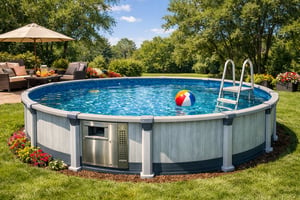
All of our pools include a reinforced stainless steel filter panel to protect the most vulnerable area, but even stainless steel can’t shield the entire pool from salt exposure.
💡 So What’s the Better Option?
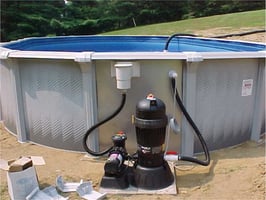
For above‑ground pools, the safest, longest‑lasting, and most cost‑effective sanitation method is a traditional chlorine system — either manual dosing or a high‑quality mineral/chlorine hybrid like our Aqua Smarte Plus Mineral System (FROG®).
These systems:
- Protect your pool structure
- Maintain manufacturer warranties
- Keep water clear and safe
- Avoid salt‑driven corrosion
- Perform reliably in Northeast climates
Saltwater is a great technology — just not for metal‑wall above‑ground pools.
🌟 Clover’s Commitment: Honest Guidance, Long‑Term Value
We don’t just sell pools — we protect your investment.
If you’re considering a saltwater system or want help choosing the right sanitation method, our team is here with clarity, honesty, and decades of experience.
Your pool should last. Your water should sparkle. And your maintenance should be simple — not a costly surprise waiting to happen.
pool,
water chemistry,
equipment,
salt water,
water balance,
pool maintenance,
stainless steel pool panel,
Above Ground Pool,
pool skimmer corrosion,
steel vs aluminum pool walls,
above‑ground pool corrosion,
steel pool corrosion,
aluminum pool corrosion,
chlorine vs saltwater,
saltwater damage pools,
saltwater pool system,
salt system risks,
pool sanitation systems